The Mountain Wind Corridor: Engineering Perimeter Integrity for Ridge-Side and Custom Valley Estates
PLAN YOUR PROPERTY LINE FENCE THE RIGHT WAY IN CENTRAL PA
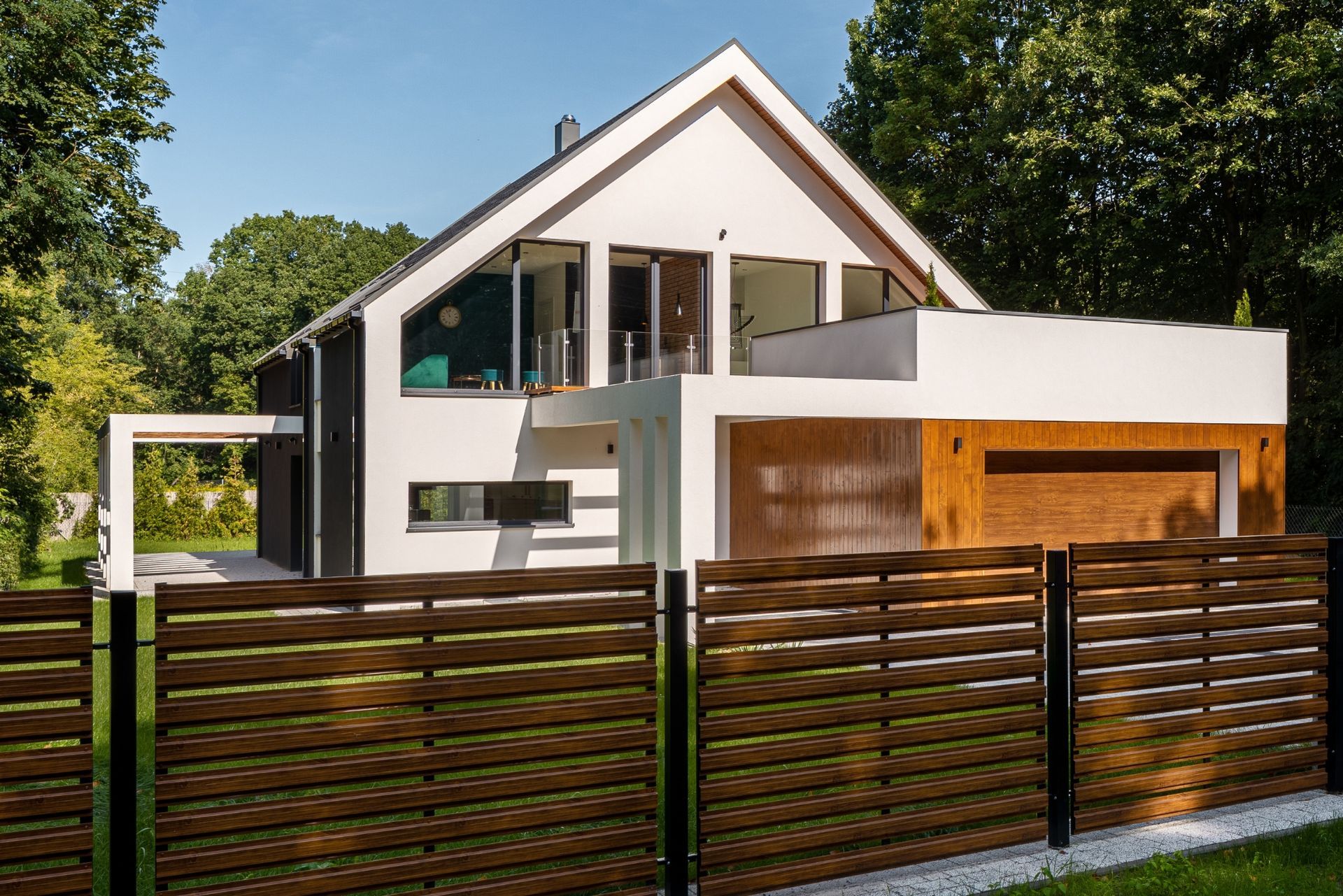
Building a custom estate in Central Pennsylvania often means choosing a homesite specifically for its view. Whether your property sits along the elevated shoulders of Mount Nittany, overlooks the valleys of Boalsburg and Colyer, or rests across open acreage in Centre Hall, those panoramic mountain views are usually the primary reason you purchased the land.
However, elevated topography and wide-open acreage create a specific environmental reality that standard residential neighborhoods rarely face: persistent, high-velocity wind.
During late fall and early winter, cold air systems sweep across the Allegheny Plateau, drop into the Nittany Valley, and funnel directly through local gaps and open pastures. On a ridge-side property, sustained thirty to forty-mile-per-hour gusts are common, with peak squalls pushing significantly higher. If you enclose a multi-acre boundary or a private backyard terrace with standard, builder-grade fencing, those mountain winds will quickly expose every structural weak point.
At Rolling Acres Fencing, we approach estate perimeters from an engineering standpoint. Protecting a high-value property requires fencing that complements your home's architecture while standing firm against the toughest mountain weather Central Pennsylvania can deliver.
Why Standard Residential Fencing Fails on Open Acreage
To understand why so many fences lean, rattle, or blow out entirely across the Centre Region, you have to look at how wind interacts with surface area.
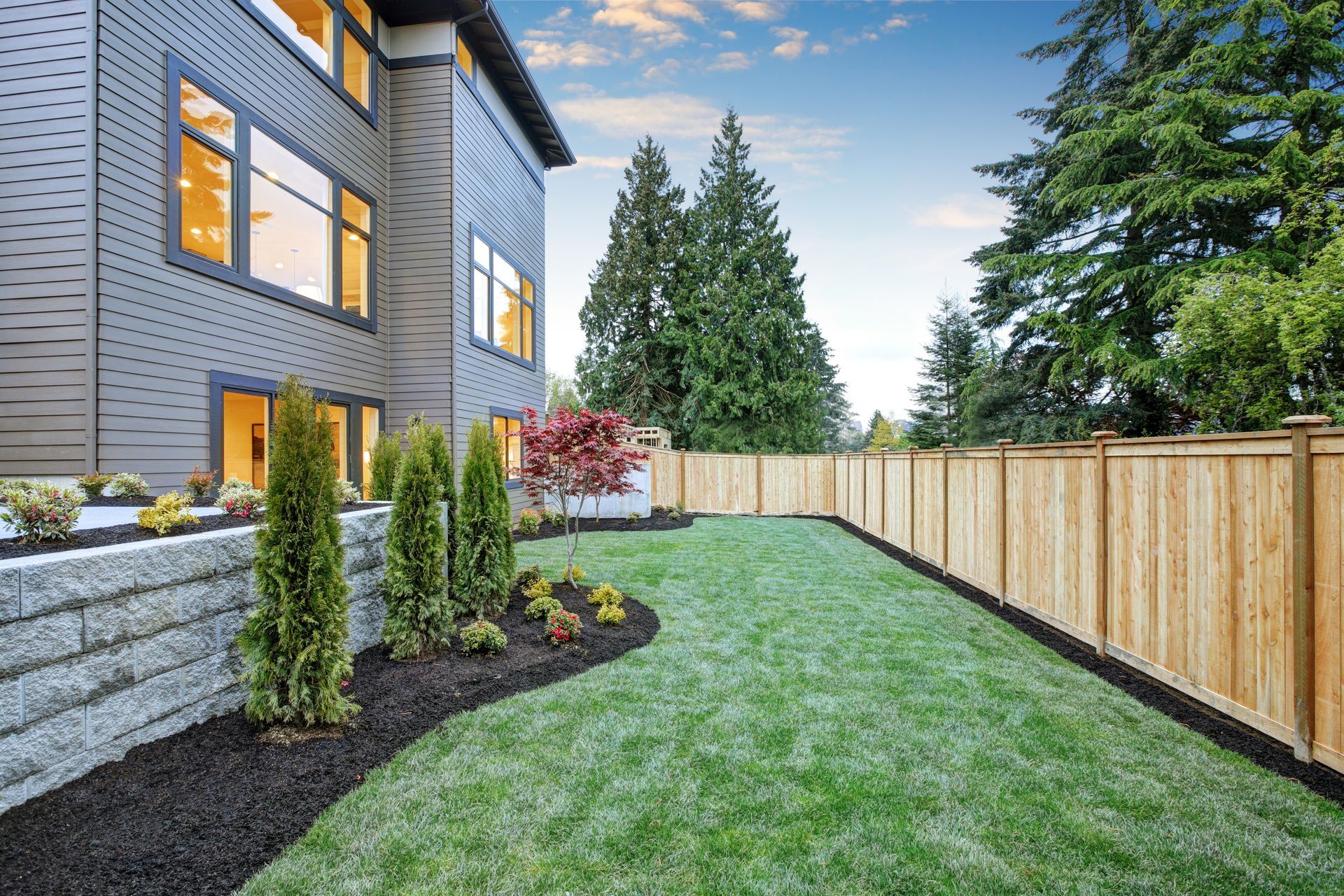
A standard six-foot solid privacy fence acts essentially as a massive sail. When a November windstorm hits an open lot, hundreds of pounds of continuous lateral force push directly against the panels. If those panels are thin-gauge vinyl or attached to lightweight posts with superficial brackets, failure is predictable. The panels flex, pop out of their routed channels, or worse, snap the post directly off at ground level.
On rolling terrain, the problem multiplies. Many builders try to install pre-assembled panels across a hillside by stepping them down like a flight of stairs. This leaves uneven gaps underneath and creates irregular pressure points along the posts. When high winds catch the underside of an improperly fitted panel, the upward lift can pull posts out of their footings or warp the framing beyond repair.
For a custom home, a damaged fence is more than an inconvenience. It is an immediate eyesore that compromises your property security, leaves high-end landscape plantings vulnerable, and requires emergency repairs in the dead of winter. High-exposure properties require materials and installation techniques designed specifically for high wind-load ratings.
Heavy-Wall Aluminum: Aerodynamic Strength for Mountain Lots
For open pastures, sweeping boundary lines, and homesites where you want to preserve the view, aluminum fencing is the gold standard.
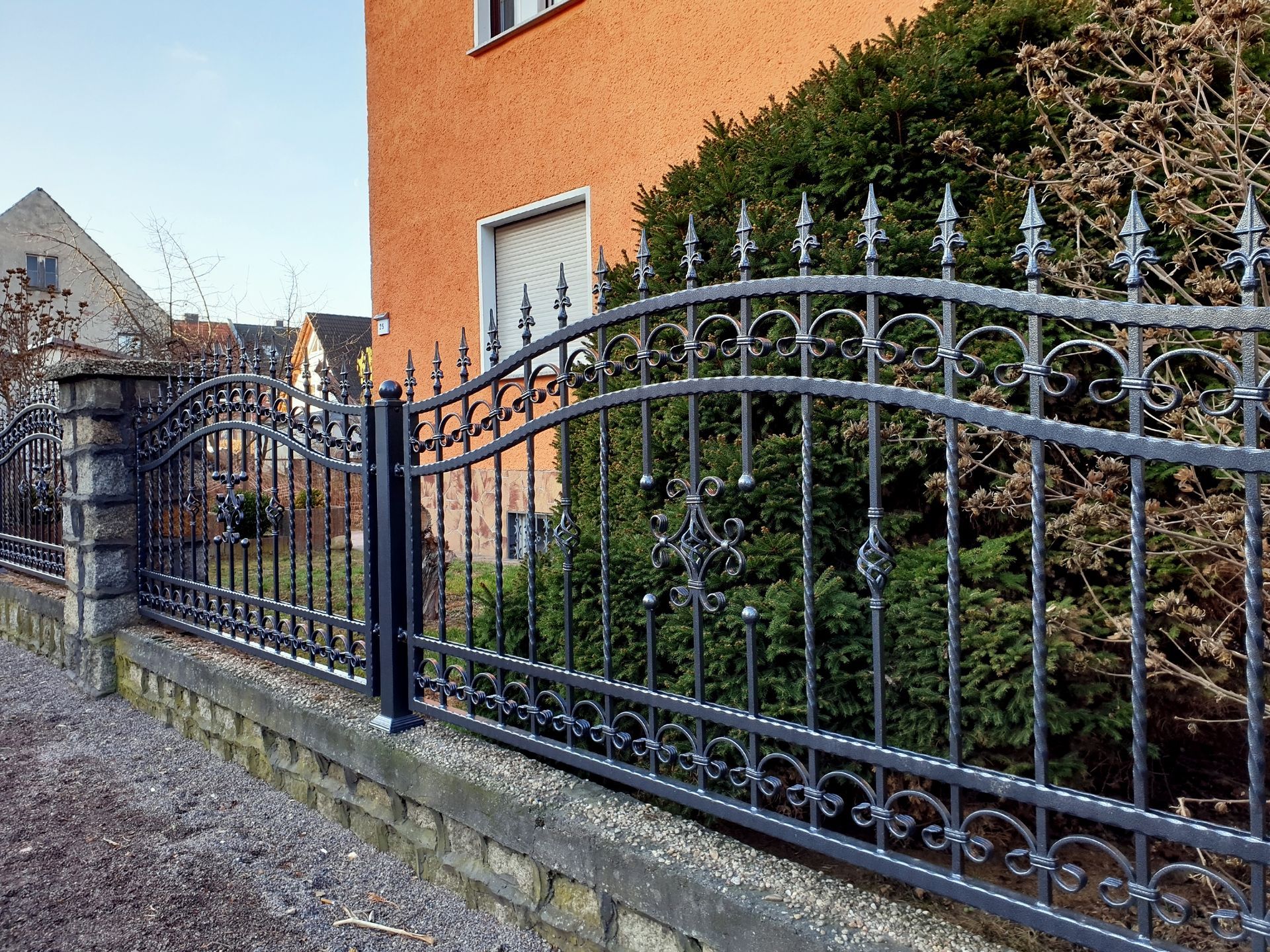
The primary advantage of ornamental aluminum in a wind corridor is simple physics: visual presence without wind resistance. Because an aluminum fence utilizes sleek, vertical pickets spaced several inches apart, mountain gusts pass straight through the structure with almost zero aerodynamic drag. Your property line stays clearly defined, and pets and children stay securely contained, but the wind has nothing to push against.
Material specifications matter here. Standard hardware-store aluminum often uses thin, hollow extrusions that can bend under drifting snow or flying debris during an autumn storm. We utilize heavy-wall, commercial-grade aluminum alloys engineered with internal structural ribs. The horizontal rails are reinforced to prevent bowing, and the vertical pickets are locked in place with internal fastening systems rather than surface screws that can back out under vibration.
Furthermore, commercial aluminum is fully rackable. On a custom estate where the lawn rolls naturally down toward a tree line or pasture, rackable panels adjust smoothly to the exact grade of the soil. This keeps the bottom rail consistently close to the turf without leaving gaps for pets to escape, while ensuring every post stands plumb and true to absorb environmental stress evenly.
Commercial-Grade Vinyl for High-Wind Privacy Zones
While open-picket aluminum is ideal for expansive boundaries, luxury homes still require complete visual privacy around specific outdoor living zones. If you have an in-ground pool terrace, a covered outdoor kitchen, or an outdoor spa facing a prevailing wind, you need a solid barrier that blocks both prying eyes and freezing drafts.
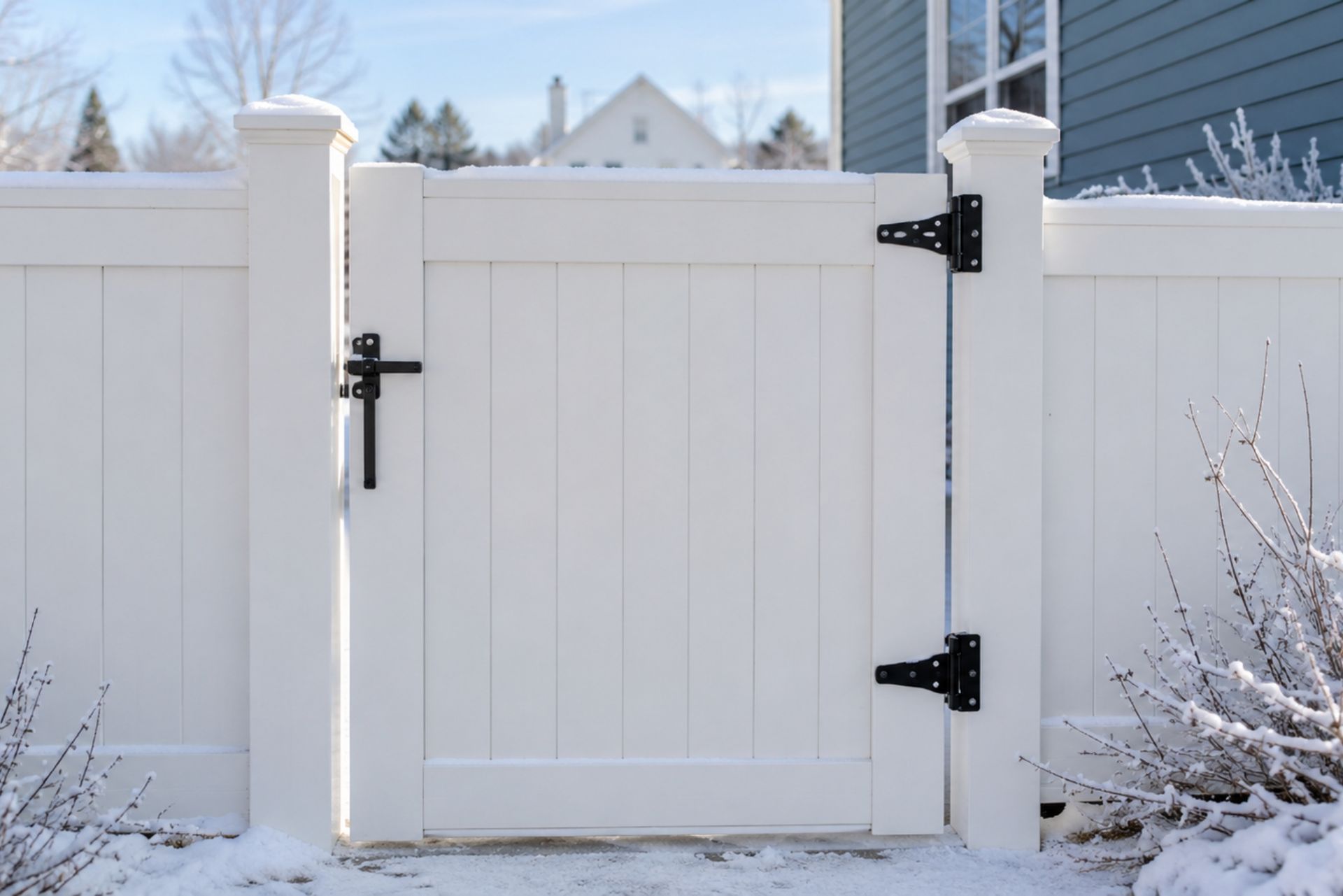
Achieving total privacy in a wind corridor without risking a structural blowout requires commercial vinyl fencing built to commercial standards.
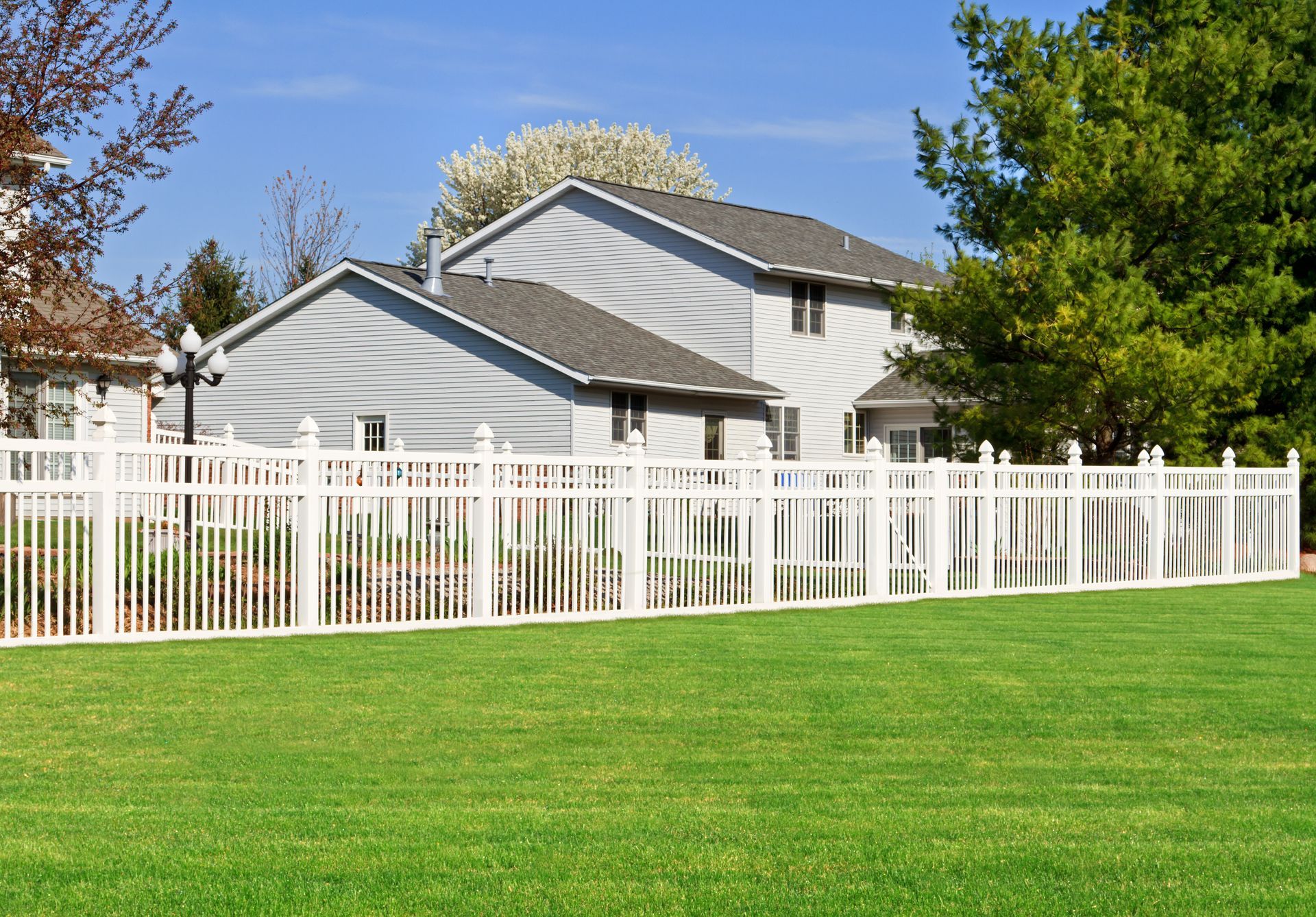
First, the panels themselves must feature precision-machined, deep-pocket tongue-and-groove joints. When individual pickets interlock tightly within a deep channel, the panel functions as a unified structural unit rather than a collection of loose plastic slats. This prevents individual boards from rattling during a storm or bowing out under pressure.
Second, the posts must be substantially heavier than standard residential stock. On high-exposure projects throughout State College, Bellefonte, and Port Matilda, we utilize heavy-wall vinyl posts anchored with internal aluminum stiffeners on gate assemblies and high-stress corner runs. An internal aluminum I-beam inside the post absorbs lateral shear forces from winter gusts, transferring the load safely into the ground rather than stressing the vinyl.
The Foundation: Frost Lines and Deep-Set Footings
You can choose the highest-grade materials on the market, but if the posts aren't anchored properly in the ground, the entire system will fail over time. In Central Pennsylvania, wind resistance and frost resistance are directly connected.
When the ground freezes, the moisture in our local clay soils expands. If a fence post is set in a shallow hole, that expanding ground will slowly lever the concrete footer upward, an issue known as frost heave. Once a post is pushed out of plumb by even a few degrees, its ability to withstand lateral wind force drops dramatically. The next major windstorm catches the compromised post and pushes it over completely.
At Rolling Acres Fencing, our installation crews use dedicated hydraulic drilling equipment to bore past the shallow surface frost and well below the regional frost line, anchoring posts thirty-six inches deep or more depending on local soil conditions. By placing most of the concrete footing deep in stable, insulated subsoil, the post stays locked in place year after year. The fence stays laser-straight, resisting both the upward push of frozen earth and the sideways push of mountain gusts.
Protecting Your Property Investment
A custom estate is a major financial and personal asset. Every element on the property, from the imported stone on the exterior to the perimeter layout, should reflect the same commitment to lasting quality.
Settling for standard fencing on an elevated or open Central Pennsylvania lot usually leads to frustration, regular maintenance calls, and premature replacement. By choosing commercial-grade materials, aerodynamic designs, and deep-set structural foundations, you ensure your boundaries look as stately and secure ten years from now as they do on installation day.
If you are designing a new estate build or upgrading an existing perimeter to handle the realities of Central Pennsylvania weather, our team is ready to help you engineer a solution that fits your property perfectly.
To discuss the specific wind loads, terrain, and architectural requirements of your property, reach out to our local team today through our contact page to schedule a comprehensive on-site consultation.